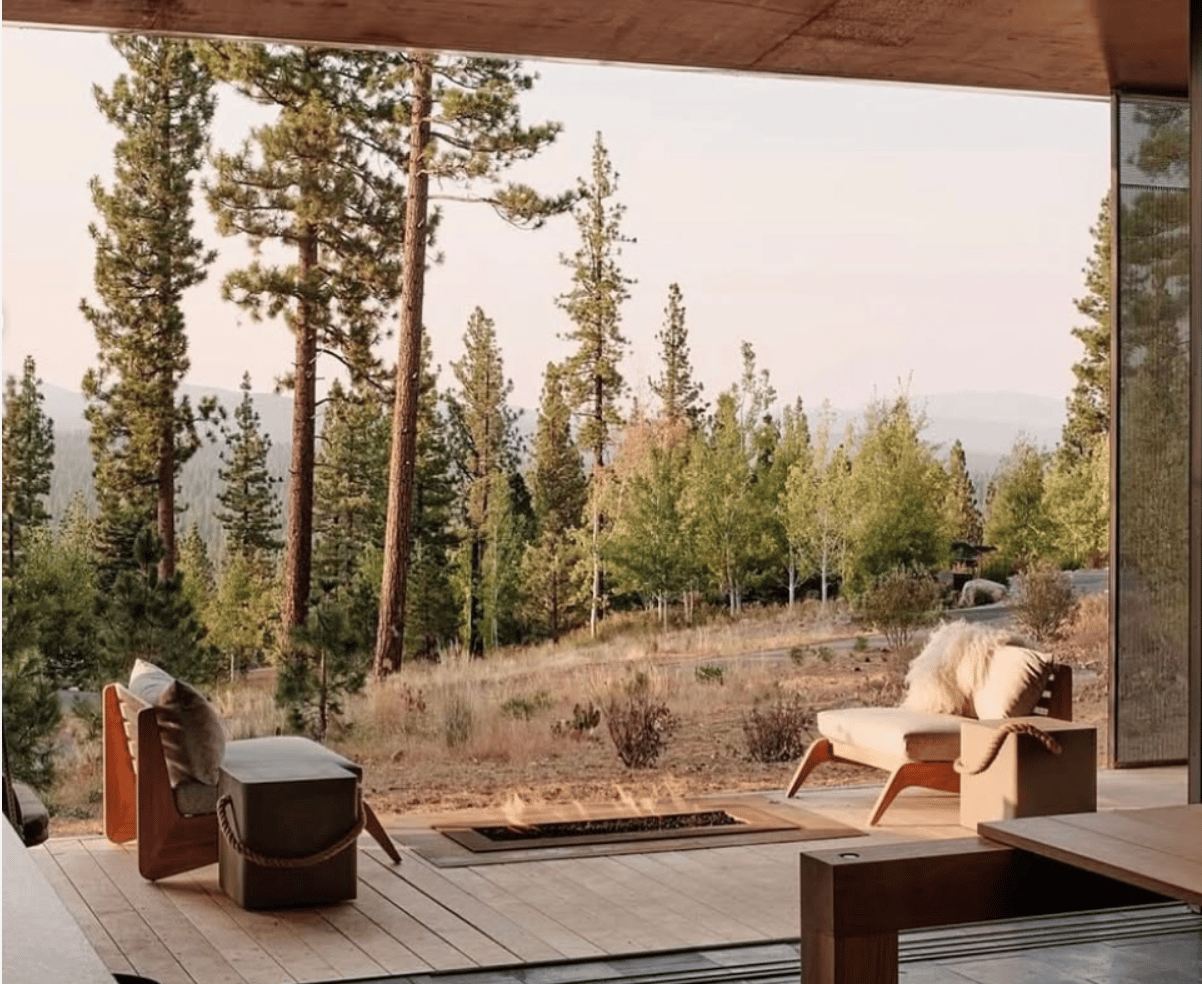
There is a moment every great mountain home gets right that lesser ones miss entirely.
It happens before you've seen the view. Before you've registered the ceiling height or noticed the kitchen. It happens in the first ten seconds... in the entry, the mudroom, the covered porch, that liminal space between the mountain and the home. When it's designed with intention, you feel it immediately. A kind of exhale. A signal that you've arrived somewhere considered.
This is the architecture of the threshold, and in the Tahoe region's finest properties, it has become an art form.
The Mudroom, Reconsidered
In mountain homes, the mudroom is not a utility afterthought. It is, in many ways, the most honest room in the house... the place where ski boots come off and the day's adventure gets set down. The best ones I've walked through feel like a decompression chamber: generous in scale, warm in material, thoughtfully lit. Teak benches. Heated stone floors. Custom lockers that feel more like furniture than function. A window that frames the tree line as you shed your layers.
In communities like Martis Camp and Northstar Mountainside, where owners move fluidly between trail and home, ski run and kitchen, this transition space has become a genuine design priority and a meaningful signal of overall build quality.
Entry as Intention
Beyond the mudroom, the entry sequence of a well-designed mountain home does something subtle but powerful: it orients you. A long covered approach that slows your arrival. A front door that requires you to pause. Sight lines carefully composed so that the first view of the interior, or the landscape beyond, lands with quiet impact.
Some of the most architecturally significant homes within Schaffer's Mill and in Lahontan achieve this through compression and release narrow, intimate entry corridors that open suddenly into soaring great rooms framed by pines and sky. The effect is theatrical, but it never feels forced. It feels like the mountain itself designed it.
The Covered Porch as Living Layer
Then there is the covered porch... that in-between space that is neither fully inside nor fully outside. In Tahoe's climate, where afternoons can shift from warm sun to afternoon storms in under an hour, this transitional layer is both practical and poetic. It extends the season. It invites lingering. It creates the kind of layered outdoor living that distinguishes a home built for this place from one merely transplanted to it.
The Wall That Disappears
Perhaps nothing captures the spirit of mountain threshold design more completely than the moment a wall ceases to exist. Disappearing glass walls and accordion door systems...spanning twelve, twenty, sometimes thirty or more feet, have become one of the most requested architectural features in Tahoe's high-end new construction and renovation market. And for good reason.
When those panels fold away, the living room doesn't just connect to the outdoors. It becomes the outdoors. The boundary between a curated interior and the forest, the ridge line, the lake dissolves entirely. The home expands, not in square footage, but in feeling. A great room that seats twelve suddenly breathes like it has no walls at all.
In the right setting — a west-facing home on the lake, a ski property edged by old-growth pine — this moment is genuinely arresting. It is also, notably, one of the features buyers remember most vividly when they describe why they fell in love with a home. Not the countertops. Not the finish schedule. The moment the wall opened and the mountain came inside.
Why This Matters in the Market
Buyers at this level have seen enough beautiful great rooms. What moves them, what makes a home stay with them after the showing, is often something harder to name. A feeling of being received by the home. Of the architecture acknowledging the journey to get there.
Threshold design is increasingly where that feeling lives. And in a market where the difference between a property that sells and one that endures comes down to emotional resonance, the homes that get this right tend to hold their value... and their memory in a way that square footage alone cannot explain.
A Note From Me
Spring is when I walk the most properties. The snow is pulling back, the light is changing, and homes reveal themselves differently this time of year, more honestly, I think. What I keep noticing is how quickly I can read a home's intention from the moment I arrive. The entry tells you almost everything: how the architect thought about arrival, how the builder understood the land, how the owners experience the daily ritual of coming home.
If you're thinking about buying or selling this season, I'd love to walk a property with you. That first impression is something I pay close attention to, and it's often where the conversation worth having begins.
Image: Faulkner Architects